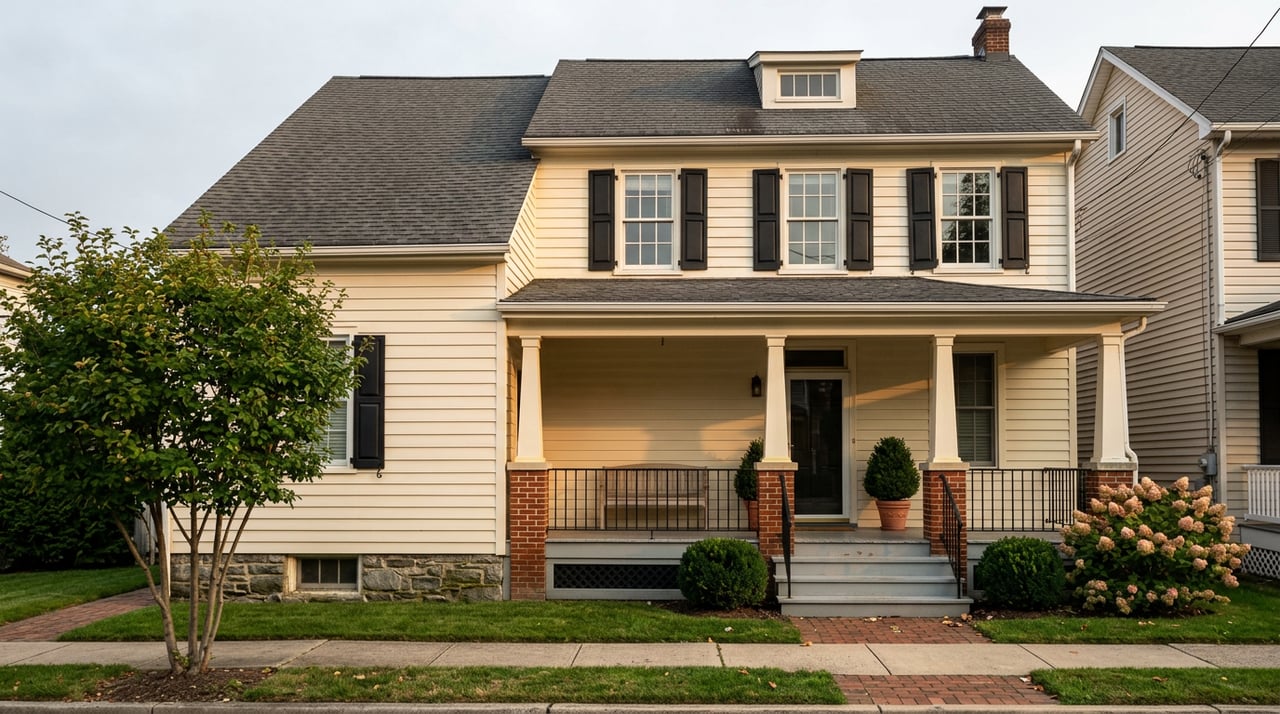
Say you've accepted an offer on a twin near Main Street in Coopersburg. Inspection contingency cleared, mortgage commitment on track, closing date circled on the calendar. Then your agent mentions one more thing: before the borough will let the sale close, a licensed master plumber has to run a camera through your sewer lateral, the pipe connecting your house to the borough's main line, and certify that it isn't letting stormwater or groundwater into the system.
Most sellers on public sewer never think about this. They know buyers worry about septic systems in rural Upper Saucon Township or Coopersburg's outlying parcels. They assume being hooked up to the borough's sewer means one less thing to inspect, not one more. Coopersburg's code says otherwise, and the reason behind it is more specific than most municipal rules ever get.
What the ordinance actually requires
Coopersburg's sewer code, Chapter 177 of the borough's ordinances, spells out the requirement in plain terms. Prior to any sale or transfer of an improved property connected to the sewer system, the selling owner has to retain a licensed master plumber, one acceptable to the Borough's Plumbing Inspector, to inspect the property's sewage drainage system, building sewer, and lateral. The inspection of the building sewer and lateral has to include a video pass to determine whether the pipe or its connections admit stormwater, groundwater, or other prohibited drainage.
If the plumber finds anything, the ordinance requires immediate notification to the selling owner, the prospective buyer, and the borough. And the code doesn't leave room for a repair credit at the closing table instead: every deficiency or violation identified has to be corrected before settlement. Depending on what the camera finds, that could mean a spot repair, a full pipe relining, or replacement, with the method approved by the borough's Public Works Director and the work performed by a certified plumber under the borough's code requirements.
That is a materially different standard than the typical home inspection contingency, where a buyer and seller negotiate a credit and move forward. Here, the fix has to happen first.
Why the borough treats this as more than a formality
The strictness starts to make sense once you look at what Upper Saucon Township Municipal Authority, which shares infrastructure with the borough, has been tracking. In minutes from a 2025 board meeting, the authority's engineering staff reported that Coopersburg's sewer line was surcharged, meaning flow exceeded the pipe's rated capacity, on 19 of 28 days during one stretch of persistent wet weather, with an average daily flow of roughly 800,000 gallons. That's not a rounding error. It's a system running over its design limit for two out of every three days in a month, driven by rainwater and groundwater finding their way into pipes that were only built to carry sewage.
The same minutes describe an inspection process that has run into resistance. Staff noted "significant pushbacks from property owners" during home sales, and named the township's water and sewer resources staff as the ones fielding those disputes directly. Read next to the flow data, that friction makes more sense too. A lateral issue may not be apparent to a homeowner until an inspection during the sale process identifies it.
That's the piece worth sitting with if you're planning to list in Coopersburg. This isn't a box-checking exercise left over from an old code book. It's an active response to a documented, measured capacity problem, aimed at keeping excess groundwater and stormwater out of the sewer system.
How Coopersburg compares to the boroughs next door
Coopersburg isn't unusual in having this kind of rule, but the specifics vary enough from one municipality to the next that a seller who's only ever transacted elsewhere in the Lehigh Valley shouldn't assume the details transfer.
| Municipality | What's required | Who performs it | Notable detail |
|---|---|---|---|
| Coopersburg | Video inspection of the building sewer and lateral, checking for prohibited stormwater or groundwater infiltration | Licensed master plumber approved by the Borough's Plumbing Inspector | All deficiencies must be corrected before settlement, with the repair method approved by the Public Works Director |
| Emmaus | Sewer lateral inspection prior to sale or transfer | Licensed journeyman or master plumber, or the borough itself | Emmaus charges $275 if the borough performs the inspection, and a passing result stays valid for two years |
| Lower Macungie Township | Building sewer inspection prior to sale or transfer | Licensed journeyman or master plumber | The township requires a physical video copy, USB preferred, kept on file for five years, electronic submissions aren't accepted |
| South Whitehall Township | Private sewer lateral inspection at time of sale | Licensed plumber | The requirement took effect January 21, 2026, adopted as part of the township's corrective action plan to reduce inflow and infiltration |
South Whitehall's timing is worth noting on its own. The township adopted its version of this rule a little over six months ago, for the same reason Coopersburg enforces its own: excess groundwater and stormwater getting into sanitary sewer lines, straining capacity, and running up treatment costs. That's several separate local governments across the same corner of Lehigh County, each independently deciding that the only reliable way to find a failing lateral is to check it at the one moment ownership changes hands.
Building the inspection into your timeline instead of your closing table
The practical fix is sequencing. Because the ordinance requires correction before settlement rather than allowing a credit in lieu of repair, an inspection scheduled after you're already under contract turns any deficiency into a closing-date problem. Scheduling it before you list gives you the option to make repairs on your own timeline, get multiple repair quotes if something needs fixing, and set a price that already accounts for the property's condition rather than renegotiating from behind.
Coopersburg's sewer code doesn't publish a set fee for the point-of-sale inspection itself, so the current cost is best confirmed directly with the borough's zoning and permits office. Emmaus's $275 borough-administered fee, a few miles away, at least gives a sense of scale for what a similar inspection costs elsewhere in the county.
If you're weighing whether to list in Coopersburg this fall, this is one of the details worth working through before you set a date, not after you've accepted an offer. Our seller's guide walks through the rest of the pre-listing sequence, and if you want a sense of where your home stands before you commit to a timeline, our free home valuation is a good place to start.
A few questions sellers ask
Does this apply if my Coopersburg home is on septic instead of the borough sewer? No. The ordinance applies specifically to improved properties connected to the sewer system. Septic systems fall under separate state and local rules.
Who pays for the inspection, buyer or seller? The ordinance places the responsibility on the selling or transferring owner, not the buyer.
What if the video finds a problem two weeks before closing? The code requires correction before settlement, so a late discovery can push your closing date. Getting the inspection done before you list is the only way to avoid that risk entirely.
Coopersburg's charm is part of why buyers want in, but the borough's own infrastructure numbers are the reason this particular inspection gets enforced the way it does. If you're getting ready to sell, Nicole Witt and the team can help you build the sewer inspection into your pre-listing checklist so it's a solved problem before your first showing, not a surprise after your first offer.
This article is general information, not legal, tax or financial advice. Consult a qualified professional about your situation.